
What Are Custom Blinds — and Are They Right for Your Home?
Custom blinds are window coverings made to your exact window measurements, unlike ready-made blinds that come in fixed standard sizes.
Here’s a quick breakdown to help you decide:
| Custom Blinds | Ready-Made Blinds | |
| Fit | Exact size for your window | Standard sizes only |
| Materials | Premium, wide selection | Limited options |
| Light control | Precise, gap-free | Often leaves light gaps |
| Design options | Virtually unlimited | Limited colors/styles |
| Lifespan | Longer-lasting | Shorter |
| Price | Higher upfront | Cheaper upfront |
If your windows are an unusual size — or you simply want your home to look polished and intentional — custom blinds are almost always the better choice.
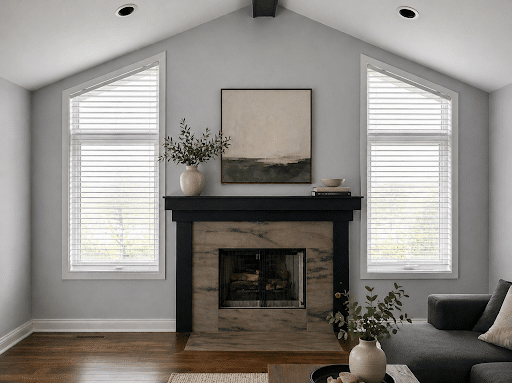
Windows vary in size even within the same room, thanks to differences in framing and drywall installation. A standard off-the-shelf blind rarely fits perfectly. And when blinds don’t fit perfectly, you get light gaps, uneven coverage, and a look that feels a little… off.
That’s frustrating, especially when you’ve put real effort into decorating your home.
This guide covers everything you need to know — from blind types and measuring to motorization, pricing, and installation — so you can make a confident, informed decision for every room in your Chicagoland home.
Custom Blinds vs. Ready-Made: Why Precision Matters
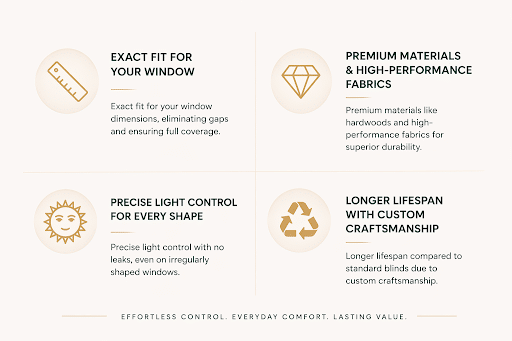
When we talk about window treatments, “close enough” usually isn’t good enough. One of the most surprising facts in the industry is that windows in the same room—even those that look identical—can vary by a fraction of an inch due to the way drywall is finished or how the house has settled. Ready-made blinds are cut to round numbers, leaving you to deal with unsightly light gaps or blinds that scrape against the frame.
Choosing Custom Blinds ensures a “glove-like” fit. This precision isn’t just about looks; it’s about performance. If a blind doesn’t sit flush, it can’t effectively block light or insulate your home. Furthermore, the material quality of custom products is significantly higher. While big-box retailers often use thinner plastics or lower-grade woods to keep costs down, custom options utilize premium hardwoods, durable faux woods, and high-performance fabrics designed to withstand the Midwestern sun.
Longevity is another major factor. A custom-made blind is an investment designed to last a decade or more, whereas ready-made versions often need replacing after just a few years of heavy use. If you are unsure about colors or textures, we always recommend viewing samples in your own home to see how the fabrics look against your actual walls and under your specific lighting.
The Benefits of Choosing Custom Blinds
Why do so many homeowners in Chicago, Naperville, and Highland Park make the switch to custom? It usually comes down to these four pillars:
- Superior Light Control: Whether you want to softly filter the morning sun in your kitchen or achieve total blackout in a nursery, custom blinds offer specialized opacities that off-the-shelf products simply can’t match.
- Enhanced Privacy: Custom fit means no “peeking” gaps at the edges of the window, which is essential for bedrooms and bathrooms facing the street.
- Energy Efficiency: Did you know that windows are responsible for a significant portion of a home’s heat loss? Cellular shades, for example, can save you significantly on energy bills by creating an insulating air barrier.
- Child and Pet Safety: Modern custom blinds prioritize safety. With the industry-wide move toward discontinuing free-hanging cords as of May 2024, custom orders allow you to choose “Best for Kids” certified cordless or motorized options.
Explore our various styles in the Category Blinds section to see how these benefits come to life in different designs.
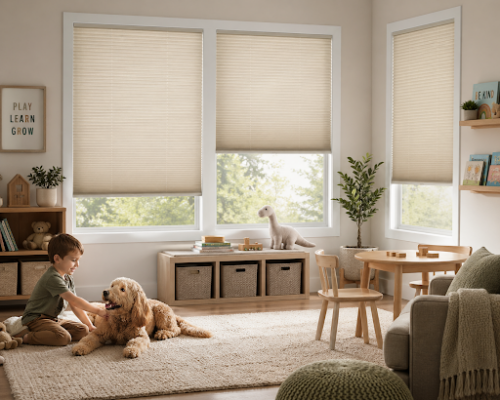
Popular Types of Custom Window Treatments
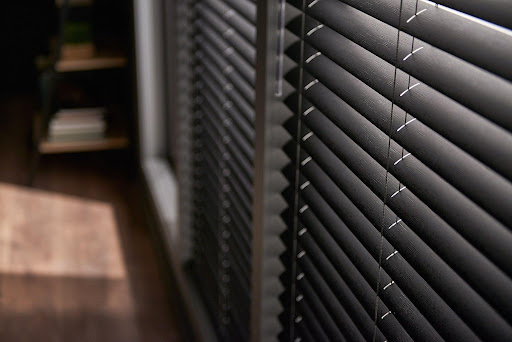
Selecting the right type of blind depends on your room’s function and your personal aesthetic. At Drapery Connection, we see a wide variety of preferences across Chicagoland, from the historic bungalows of Oak Park to the modern high-rises in the city.
Wood and Faux Wood Blinds
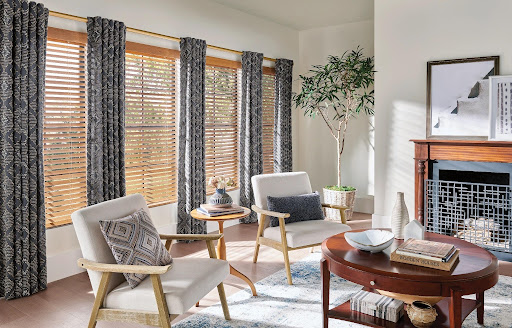
Wood blinds bring an unmistakable warmth and organic texture to a room. They are lightweight and offer a classic look that never goes out of style. However, for high-humidity areas like bathrooms or kitchens in Downers Grove and Geneva, faux wood is often the smarter choice. Faux wood is moisture-resistant and won’t warp, peel, or crack, giving you the look of real timber with added durability.
Aluminum and Metal Blinds
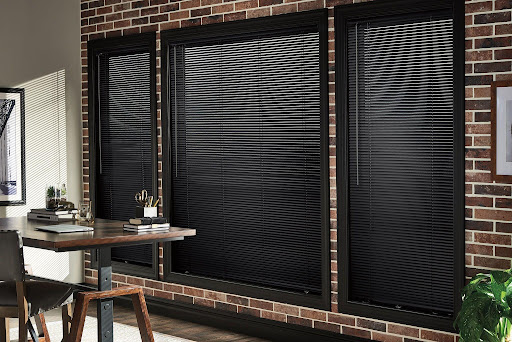
Don’t call them “basic.” Modern aluminum mini-blinds are sleek, incredibly durable, and perfect for high-traffic areas or home offices. They offer a clean, industrial vibe and are excellent for precise light tilt control.
Vertical Blinds
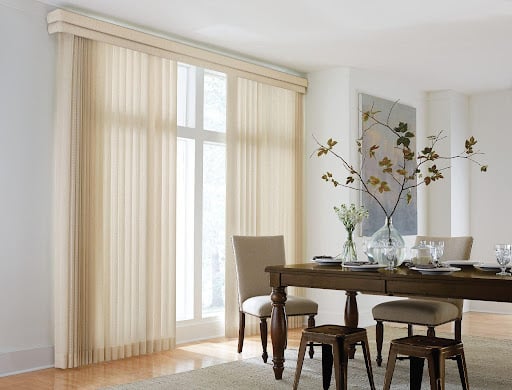
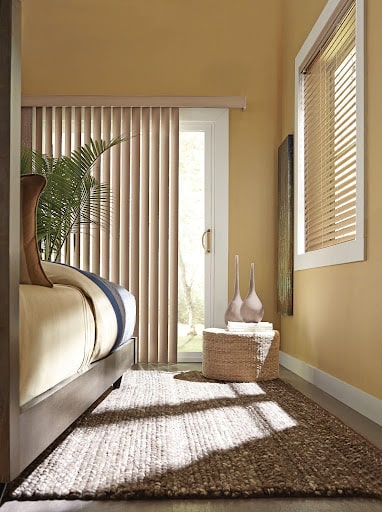
If you have sliding glass doors or massive floor-to-ceiling windows, vertical blinds are your best friend. Modern versions, such as Graber Blinds at Drapery Connection, feature heavy-duty headrails and quiet, smooth-tracking carriers. You can even opt for fabric-wrapped vanes to soften the look of a large patio door.
Comparing Shades: A Quick Reference
Not all “blinds” are technically blinds—many are shades. Here is how the most popular fabric options stack up:
| Type | Best For | Key Feature |
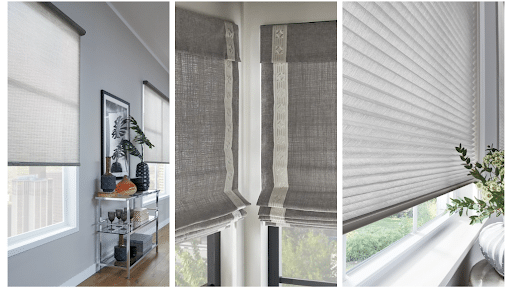
| Roller Shades | Modern/Minimalist decor | Clean lines, disappears when up |
| Roman Shades | Elegance and softness | Fabric folds that cascade |
| Cellular Shades | Insulation and privacy | Honeycomb shape traps air |
Exploring Versatile Window Styles
Beyond the standard horizontal slats, there is a world of Blinds & Shades to explore.
- Roller Shades: These are the “little black dress” of window treatments. They are simple, functional, and come in thousands of patterns.
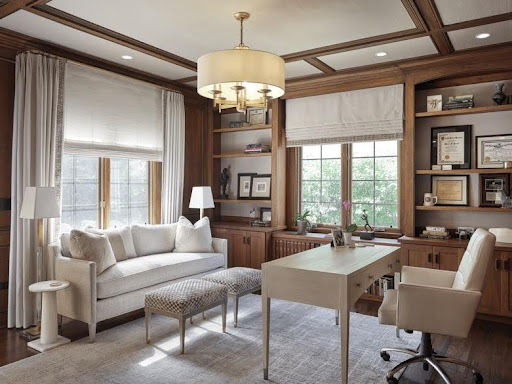
- Roman Folds: These shades offer the luxury of drapery with the functionality of a blind. They are perfect for dining rooms or primary suites where you want a “wow” factor.
- Cellular Honeycombs: These are the workhorses of the industry. They offer incredible thermal insulation, which is a lifesaver during a Chicago winter.
- Woven Woods: Made from grasses, bamboo, and reeds, these shades add a “global” or “coastal” texture to your home. Because they are made from organic materials, every shade is unique.
Essential Features: Motorization, Blackout, and Safety for Custom Blinds
The “custom” in custom blinds doesn’t just refer to the size—it refers to the features. Today’s window treatments are smarter and safer than ever before.
Smart Home Integration
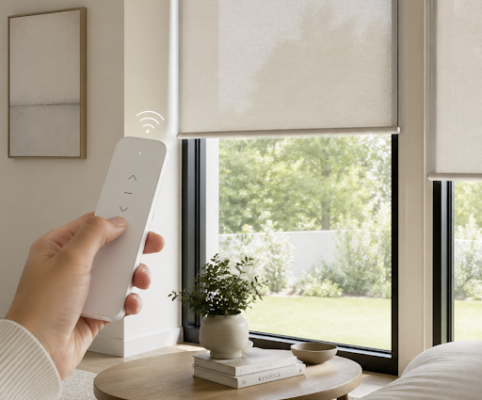
Imagine saying, “Alexa, open the blinds,” while you’re still sipping your morning coffee. With Motorized Blinds & Shades, this is a reality. Motorization isn’t just a luxury; it’s a functional upgrade for hard-to-reach windows, such as those in a two-story foyer or behind a large soaking tub. You can schedule your shades to close at sunset for privacy or open during the day to let your houseplants soak up the sun.
Safety First
As of May 15, 2024, new industry standards (WCMA/ANSI) have effectively ended the era of free-hanging cords on custom window coverings. This is a massive win for families with small children and pets. When you order custom, you can choose from cordless “lift and lock” systems, wand controls, or full automation to ensure your home is beautiful and safe.
For more inspiration on how these features look in real homes, be sure to Follow Drapery Connection on Instagram.
Enhancing Your Home with Smart Custom Blinds
Smart blinds offer more than just convenience; they offer peace of mind.
- PowerView Automation: This allows you to control your treatments via a pebble remote, a smartphone app, or even voice commands through Google Assistant or Amazon Alexa.
- Scheduling for Security: If you’re away on vacation, you can set your blinds to open and close at different times, giving your home a “lived-in” look that deters intruders.
- Total Blackout: For shift workers or parents of toddlers, blackout shades are non-negotiable. Custom blackout blinds often include side channels or light-blocking seals to ensure that 100% of outside light is kept at bay.
- Thermal Insulation: By automating your shades to close during the hottest part of a summer day, you can significantly reduce your cooling costs.
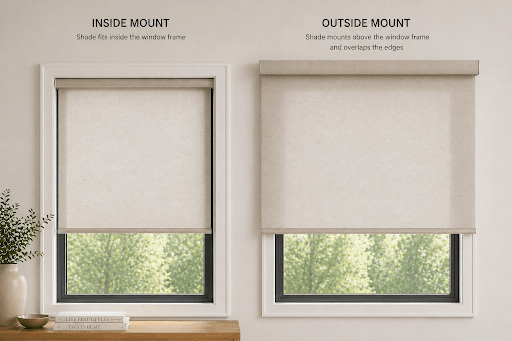
Inside Mount vs. Outside Mount
- Inside Mount: The blind sits inside the window frame. This provides a clean, built-in look and shows off your window’s decorative molding. It requires a certain amount of “depth” within the frame to accommodate the headrail.
- Outside Mount: The blind is mounted on the wall or the window trim. This is best if your windows aren’t perfectly square, if the frame isn’t deep enough for an inside mount, or if you want to make a small window appear larger.
Measuring Like a Pro
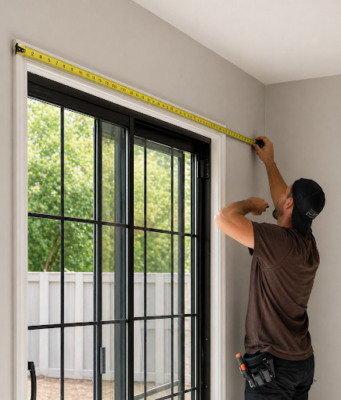
- Width: Measure at the top, middle, and bottom. For inside mounts, use the narrowest width.
- Height: Measure at the left, middle, and right. For inside mounts, use the longest height (unless the manufacturer specifies otherwise).
- Depth: Ensure there is enough room for the blind to operate without hitting the glass or the window handle.
While many online sources suggest that “over 99% of customers measure and install their own,” we find that in the Chicagoland area, many homeowners prefer the peace of mind that comes with Professional Installation Services. Our installers handle the heavy lifting, ensure the brackets are secured into studs, and even program your motorization settings before they leave.
Frequently Asked Questions about Custom Window Coverings
How much do personalized window treatments typically cost?
The cost of custom blinds varies based on several factors. A standard faux wood blind might start as low as $60-$100, while high-end motorized Roman shades or specialty cellular shades can range significantly higher. The primary factors affecting price are:
- Material: Real wood and designer fabrics cost more than aluminum or vinyl.
- Size: Large or oddly shaped windows (arches, trapezoids) require more material and specialized labor.
- Features: Motorization and smart home integration add to the upfront cost but increase the home’s value and convenience.
What is the difference between inside and outside mount?
An inside mount provides a “flush fit” where the blind is tucked away within the window box. An outside mount covers the entire window opening and trim. Outside mounts are superior for light blocking because they can overlap the wall, eliminating the small light gaps that sometimes occur with inside mounts.
Are custom window coverings difficult to install?
Improper mounting can lead to uneven blinds, wall damage, or worse, coverings that simply don’t fit right. Masonry walls, high ceilings, oddly shaped windows, and motorized systems all demand expert knowledge and specialized tools that most homeowners simply don’t have on hand. Beyond the technical challenges, a poorly installed window covering can void your warranty and cost more to fix than the original installation would have. At Drapery Connection, our professional installers handle every detail with precision—so your investment looks exactly as it should from day one. And with our ‘fit guarantee,’ when we measure and install it, we guarantee it fits perfectly. Why risk the frustration? Leave it to the pros.
Conclusion
Your home is likely your biggest investment, and the details matter. Custom blinds are more than just a way to block the sun; they are a finishing touch that defines the mood, comfort, and efficiency of your living space. From the sleek functionality of motorized rollers to the timeless elegance of handcrafted wood slats, the right window treatment can truly transform a room.
At Drapery Connection, we’ve spent four generations perfecting the art of the window. Whether you’re in Chicago, Hinsdale, Naperville, or Lake Geneva, our team is dedicated to providing personalized design and professional, turnkey installation. We take the guesswork out of measuring and the stress out of styling.
Ready to see the difference that 85+ years of local expertise can make? Transform your home with custom blinds and experience window treatments designed specifically for you.