
Why Your Home Deserves Peace and Quiet
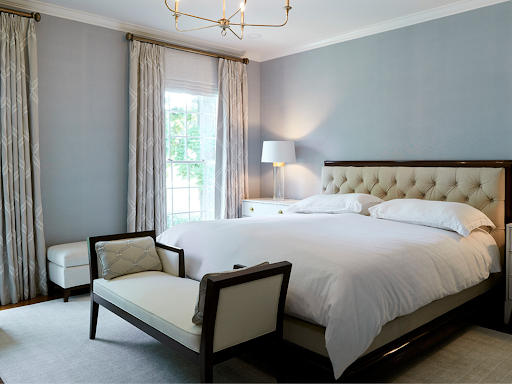
Soundproofing window treatments are specialized curtains, shades, or shutters designed to reduce external noise by absorbing or blocking sound waves before they enter your home. Here’s what works best:
Top Soundproofing Window Treatments:
- Cellular (Honeycomb) Shades – Absorb up to 70% of sound energy through their air-trapping cellular structure
- Heavy Acoustic Curtains – Reduce noise by 7-15 decibels using thick, multi-layered fabrics
- Custom Shutters – Create a solid barrier that physically blocks sound transmission
- Layered Treatments – Combine shades with drapes for maximum noise reduction
The constant traffic hum, the neighbor’s barking dog, the early morning garbage trucks—if you live in the Chicagoland area, you know these sounds all too well.
You moved into your home seeking tranquility, but instead, outside noise invades through your windows, disrupting your morning coffee, work-from-home calls, and peaceful evenings. The problem isn’t your neighborhood—it’s your windows.
Windows are designed to let in light, but that design also lets in sound. The good news? You don’t need to replace your windows to reclaim your peace. The right window treatments can dramatically reduce unwanted noise while adding beauty, privacy, and energy efficiency to your home.
This guide will walk you through how soundproofing window treatments work, which options deliver the best results, and how to maximize their effectiveness in your Chicagoland home.
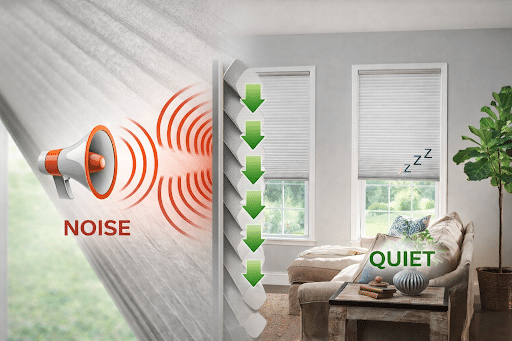
Understanding How Noise Invades Your Home
Before you can silence the chaos, it helps to understand how noise gets in. Sound is energy that travels in waves, and windows are often the easiest entry point into your home. It happens in two main ways:
The most common way noise sneaks in is through air gaps and cracks. Even the tiniest opening around your window frame becomes a superhighway for sound waves. This is called sound flanking. Sound takes the easiest path, and unsealed gaps are the express lane.
The second way noise invades is through vibration. When sound waves hit your window glass, they make it vibrate like a drum. That vibration travels through the glass and releases the sound into your room.
To measure how well materials block sound, experts use an STC rating (Sound Transmission Class). Higher numbers mean better sound blocking. Windows typically have low STC ratings compared to walls. Noise is measured in decibels (dB), and even a small reduction can make your home feel noticeably more peaceful.
Not all noise is created equal. High-frequency sounds like barking dogs and car horns are easier to reduce with soundproofing window treatments. Low-frequency noise—that deep rumble from heavy trucks—is trickier because its longer sound waves can push through materials more easily.
Why Windows are the Primary Culprits
While windows bring in light and views, they’re often the weakest acoustic link in your home.
Single-pane glass is the biggest offender. Many older Chicagoland homes still have these thin sheets of glass that offer almost no resistance to sound. They vibrate easily and let noise pass right through.
Even double-pane windows aren’t immune. The glass still vibrates, transmitting outdoor sounds into your living space.
Then there’s the issue of poorly sealed frames. Over time, seals around window frames can crack or shrink, creating air gaps that let sound bypass the window entirely.
Gaps around the frame where your window meets the wall are another problem. Small imperfections from construction or the settling of your home can open up pathways for sound to leak through.
Even the frame material itself—whether it’s vinyl, wood, or aluminum—can affect sound transmission, though the glass and seals are usually the main culprits.
Sound Absorption vs. Sound Blocking
When shopping for ways to quiet your home, you’ll hear two key terms: sound absorption and sound blocking. Understanding both helps you choose the right soundproofing window treatments.
Sound absorption is like a sponge for noise. Absorptive materials have soft, porous surfaces (like thick fabrics or honeycomb structures) that soak up sound energy and convert it into tiny amounts of heat. This reduces echo and makes a room feel quieter inside.
Sound blocking is about creating a barrier. This requires mass and density. Heavy, thick materials are hard for sound waves to vibrate or penetrate, so they reflect or stop sound waves before they can reach your ears.
The best soundproofing window treatments do both. They block external noise from entering and absorb whatever sound does make it through. At Drapery Connection, our custom solutions are designed with both principles in mind for maximum noise reduction.
When you combine blocking and absorption, you create multiple lines of defense against unwanted noise. For more details on how this works in practice, check out our Noise Reduction page.
The Best Soundproofing Window Treatments for a Quieter Home
Now that we understand how sound gets in, let’s explore the soundproofing window treatments that can transform your noisy Chicagoland home into a peaceful sanctuary.
Effective noise reduction relies on a few key principles. Material density is your first ally—thicker, heavier materials have more mass to absorb and block sound. Layering multiplies this effect, creating multiple barriers. And ingeniously, cellular structures trap air pockets that act as natural sound dampeners.
But what makes the biggest difference is a custom fit. At Drapery Connection, we’ve seen it time and again over four generations—off-the-shelf treatments leave gaps, and gaps are sound’s favorite shortcuts. Custom window shades and drapes designed for your specific windows create a seal that dramatically improves their sound-blocking performance.
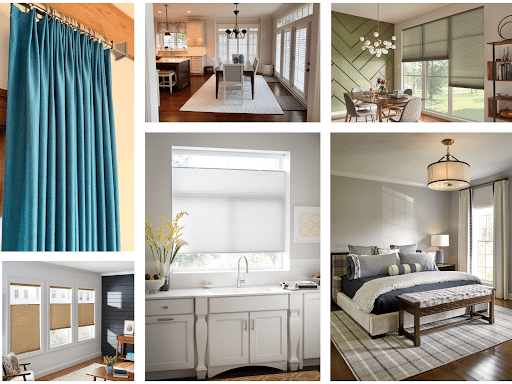
Acoustic Curtains and Heavy Drapes
That substantial weight you feel in a heavy curtain is your first clue to its noise-fighting power.
Thick, heavy fabrics like velvet and suede aren’t just luxurious—they’re acoustic workhorses. Their density absorbs sound energy rather than letting it pass through. The real magic happens with multiple layers. A quality acoustic drape often features several layers of fabric, including a dense blackout liner. This adds mass and creates air pockets to trap sound, which can reduce noise by 7 to 15 decibels. A 10-decibel reduction makes noise sound roughly half as loud.
For maximum effectiveness, we recommend floor-to-ceiling coverage that extends beyond your window frame. This eliminates the gaps around the edges where sound loves to sneak through. As a bonus, these drapes also provide excellent thermal insulation, light control, and privacy.
Explore our range of Draperies Curtains and Custom Drapes Panels to find the perfect blend of style and silence for your home.
Why Cellular (Honeycomb) Shades are Top Performers
If heavy drapes are the strongman of soundproofing, cellular shades are the clever engineer. Their genius lies in their structure.
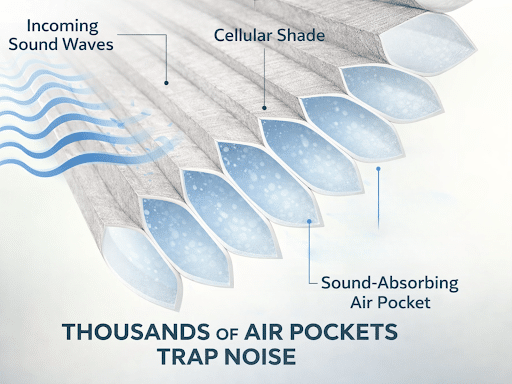
Their distinctive cellular construction creates thousands of tiny air pockets that actively trap and absorb sound waves before they can enter your room. The results are impressive: quality cellular shades can absorb up to 70% of sound energy, creating a noticeably quieter environment. This makes them one of the most effective single treatments you can install.
For even better performance, double-cell or triple-cell options create additional layers of air pockets, improving both sound absorption and temperature insulation. Beyond sound-dampening, cellular shades are renowned for energy efficiency, helping to keep your home comfortable in Chicago’s climate. They also offer excellent light control and privacy options.
Browse our collection of Blinds Shades to find the quiet power of cellular shades.
The Solid Barrier: Custom Shutters
For a more permanent, architectural solution, custom shutters block noise rather than absorbing it. The solid construction of wood or composite shutters creates a rigid barrier that sound waves struggle to penetrate. When properly installed and closed, shutters create a physical barrier across your entire window opening.
The fit matters tremendously. When custom shutters are precisely measured and installed with a snug fit, they effectively seal the window opening, minimizing troublesome air gaps. Beyond their acoustic benefits, shutters are a durable, timeless investment in your home’s value and style.
Find the enduring quality and sound-blocking power of our Shutters.
Layering Treatments for Maximum Effect
Why settle for one solution when combining treatments can multiply your results? The most powerful approach is pairing cellular shades with heavy drapes. The shades mount close to the window, trapping sound, while the drapes add an outer layer of dense fabric to block and absorb even more. Together, they create a “one-two punch” against noise.
This layering also creates an insulating space between the layers, which further dampens sound. You can also combine blinds with curtains for a similar effect. Each combination creates multiple barriers that force sound waves to expend more energy, making them far more effective than any single solution.
For personalized advice on creating the perfect layered combination, explore our Drapery Styles and Installation Services.
Maximizing Noise Reduction: Installation and Improvement Tips
You’ve chosen the perfect soundproofing window treatments, but even the most effective products can fall short if they’re not installed properly. Tiny gaps around the edges are like open invitations for sound to waltz right in.
Professional installation makes all the difference. Our team at Drapery Connection has been perfecting this craft for four generations, and we know that precision matters. But whether you work with us or tackle improvements yourself, understanding what makes an installation effective is crucial.
Sealing gaps is a vital step. Before installing your treatments, inspect your window frames for any cracks or openings. Weatherstripping can close these gaps and prevent sound from sneaking through. For larger gaps in the wall around your window, acoustic caulk is your friend—it’s designed to block sound and remains flexible over time.
The Critical Role of a Custom Fit
Here’s where we get passionate at Drapery Connection: a custom fit changes everything.
Standard, off-the-shelf treatments are made to fit “most” windows, but they often leave small gaps that act as acoustic highways for noise.
When you choose custom window shades and drapes designed to fit your windows perfectly, you’re eliminating those gaps. This snug fit helps block out noise more effectively than standard options. It’s not just about looking good—it’s about creating a seal that sound simply can’t penetrate.
Wall-to-wall and floor-to-ceiling coverage takes this even further. When drapes extend beyond the window frame, you create a complete sound barrier. The choice between an inside mount (within the frame) and an outside mount (covering the frame) also matters. For maximum noise reduction, we often recommend an outside mount for shades and blinds to minimize light and sound gaps.
At Drapery Connection, we know that a perfect fit isn’t just about aesthetics; it’s about performance and peace. For more information on how our custom solutions can transform your home, visit our page on Custom Drapes Panels.
Smart Control for a Quieter Home
Why shouldn’t creating a peaceful home be as easy as tapping your phone? Motorized treatments offer more than just convenience—they give you precision control over your home’s acoustics. With the tap of a button, your sound-dampening treatments glide into place, and your focus never breaks.
The real power comes with scheduling for quiet hours. You can program your treatments to close automatically during peak noise times, like early morning garbage collection. Your home proactively protects your peace before you even realize you need it.
Smart home integration takes this convenience further. Our motorized window treatments connect with systems you’re already using. Control them through an app on your smartphone or use voice control to say, “Close the living room shades,” for instant tranquility. It’s perfect for when you’re curled up with a book or hosting guests.
To explore how motorization can transform your Chicagoland home, check out The Ultimate Guide to Motorized Window Treatments in Chicago and our Motorization options.
Frequently Asked Questions about Soundproofing Window Treatments
We talk to Chicagoland homeowners every day who are searching for relief from unwanted noise. Here are answers to the most common questions based on our four generations of experience.
What types of noise are most effectively reduced by window treatments?
Soundproofing window treatments work best against high-frequency sounds—the sharper, more piercing noises. This includes the constant hum of traffic, voices from outside, a barking dog, and the harsh sounds from landscaping crews. Aircraft noise, particularly the higher-pitched engine whine, can also be significantly reduced.
What’s trickier? Low-frequency rumbles, like the deep bass from a neighbor’s music or heavy construction. These longer sound waves are much harder to block without structural changes. However, our treatments still offer some dampening and improve your overall acoustic comfort, even if they don’t eliminate the bass completely.
When should I consider additional solutions beyond window treatments?
While soundproofing window treatments are an incredibly effective first step, sometimes the situation calls for more.
If your home has single-pane windows or damaged, deteriorated frames, the primary barrier is weak. You may need to address those issues first for treatments to work their magic. For severe noise problems—like living next to a highway or train line—a more comprehensive strategy might be required.
This is where budget considerations come in. Replacing windows can cost thousands of dollars. For most Chicagoland homeowners, our Drapery Connection treatments offer a powerful, less invasive alternative that delivers substantial relief without the cost and disruption of construction.
That said, if you’re facing extreme noise and budget isn’t a limiting factor, combining new soundproof windows with our treatments creates the ultimate fortress of quiet. But we always recommend starting with treatments first.
How much noise reduction can I realistically expect?
Let’s set realistic expectations. Soundproofing window treatments will significantly reduce noise and make your home noticeably quieter, but they won’t create a recording studio vault. Think of them as excellent noise dampeners.
The actual reduction depends on the treatment type and installation. Cellular shades can absorb up to 70% of sound energy, a dramatic improvement you’ll feel immediately. Heavy acoustic curtains can reduce external noise by 7 to 15 decibels. A reduction of just 10 decibels is perceived by your ears as roughly halving the loudness.
Here’s the secret to maximizing your results: combining methods. When you layer cellular shades with heavy drapes and ensure a custom, gap-free installation, you create multiple barriers that are far more effective.
While complete soundproofing typically requires structural changes, our soundproofing window treatments provide a remarkable improvement in acoustic comfort. We’ve seen countless homeowners reclaim the peace they deserve, and we’re confident we can help you do the same.
Your Chicagoland Solution for a More Peaceful Home
You deserve a home where you can actually hear yourself think. As this guide has explored, the right soundproofing window treatments can transform your noisy Chicagoland home into the sanctuary it should be.
From the dense, multi-layered construction of custom drapes, to the ingenious cells of cellular shades that trap up to 70% of sound energy, to the solid barrier of custom shutters—each solution offers a path to tranquility. When you layer these treatments, you create a powerful defense against outside noise.
But even the best window treatment can’t work its magic if it doesn’t fit properly. Gaps around the edges let noise in, which is why a custom fit isn’t a luxury—it’s essential. And that’s where Drapery Connection comes in.
With four generations of family expertise serving Chicagoland, we don’t just sell window treatments. We listen to your specific noise challenges and design solutions truly custom to your home. Our professional, turnkey installation means no gaps, no guesswork, and no compromise on the peace you’re seeking.
You don’t have to live with the noise anymore. Our team is ready to help you muffle the madness and create the quiet, comfortable home you’ve been dreaming about. We’ve seen every noise scenario Chicago can offer, and we know how to solve it.
For a personalized consultation in the Chicagoland area, the experts at Drapery Connection can design and install the perfect noise-reducing solution for your home. Let’s work together to bring back the peace. Start designing your custom drapes and panels today and take the first step toward a quieter tomorrow.