Pinch Pleat & Tailored Drapery Styles in Chicago, IL
A drapery pleat is more than a decorative fold. It shapes how fabric falls and how light filters through a room, and it determines whether a window treatment still holds its shape after years of daily use. For Chicagoland homeowners weighing specialized drapery pleats against off-the-shelf curtains, the difference shows up every time the drapes open and close.
At Drapery Connection, we’ve spent more than eight decades helping families across the city and suburbs choose pleat styles that match their architecture, their light, and their lifestyle. This guide breaks down the pleat styles we fabricate most often, Pinch Pleat, Tailored Pleat, Ripplefold, Euro Pleat, and Inverted Box Pleat, so you can walk into a consultation already speaking the language.
Specialized Drapery Pleats: The Art of Custom Tailored Window Treatments
Pleated window treatments shape the silhouette of a drape while controlling how much fullness, light, and privacy a room gets. Fullness ratios, the amount of fabric gathered relative to window width, typically run 2x for cleaner styles and climb to 3.5x for the most luxurious, densely gathered options. That ratio, along with fabric weight and pleat construction, is what separates custom-made drapes from a pre-hung panel bought off a shelf. Every pleat style we build starts with a conversation about your windows, your ceiling height, and how you actually live in the room.
Pinch Pleat Drapery for Chicago’s Classic Interiors
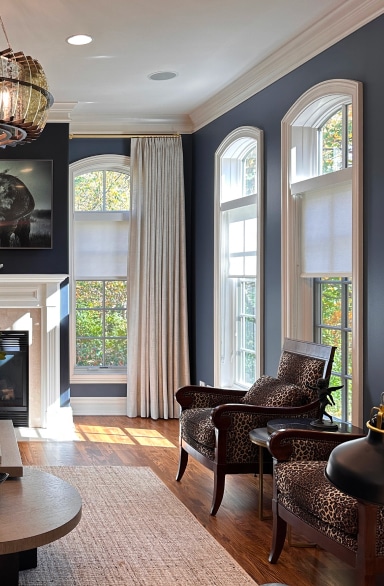
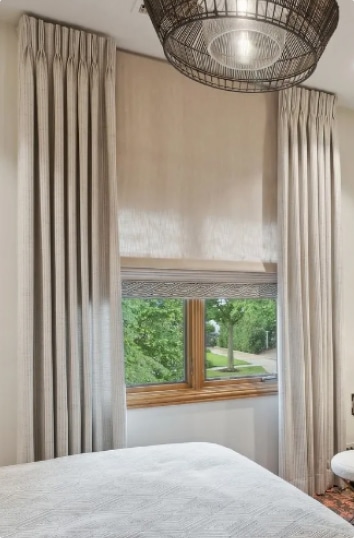
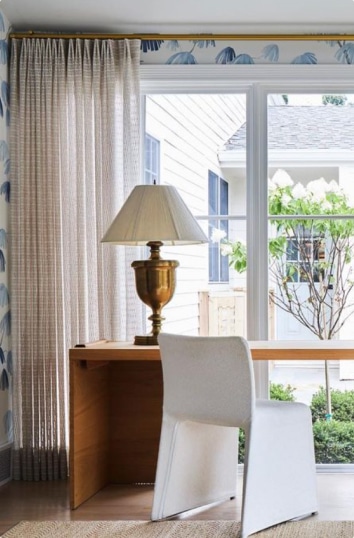
Pinch pleat drapery in Chicago IL is what homeowners request most often for pre-war condos, lakefront colonials, and homes with substantial millwork. Pinch pleat curtains gather fabric into single, double, or triple folds, stitched together and attached to the rod with hooks or rings. That stitched pinch is reinforced with a 4-inch buckram stiffener sewn into the header, giving the drape memory so it opens and closes the same way every time.
Tailored pleat is the broader family these styles belong to, covering any pleat built on a stiffened header that holds a deliberate, structured fold rather than falling loose. That construction is why a well-built pinch pleat drape still hangs correctly a decade later.
Two-Finger, Three-Finger, and Cartridge Pinch Pleat Options
Types of pinch pleat curtains vary mainly by finger count and fullness. The two-finger pleat delivers roughly 2x fullness, a cleaner, more contemporary look at more economical fabric yardage. The three-finger, or French Pleat, is the most traditional option, sitting around 2.5x fullness for the fullest, most classic drape.
Cartridge pleats trade the pinched fold for a cylindrical, rounded shape spaced more widely across the header, giving a tailored, slightly casual finish that suits transitional spaces. Comparing pinch pleat vs tailored pleat curtains often comes down to this: pinch pleats gather at discrete points, while tailored pleats read as a continuous, structured fold.
Ideal Settings: North Shore Estates and Traditional Living Spaces
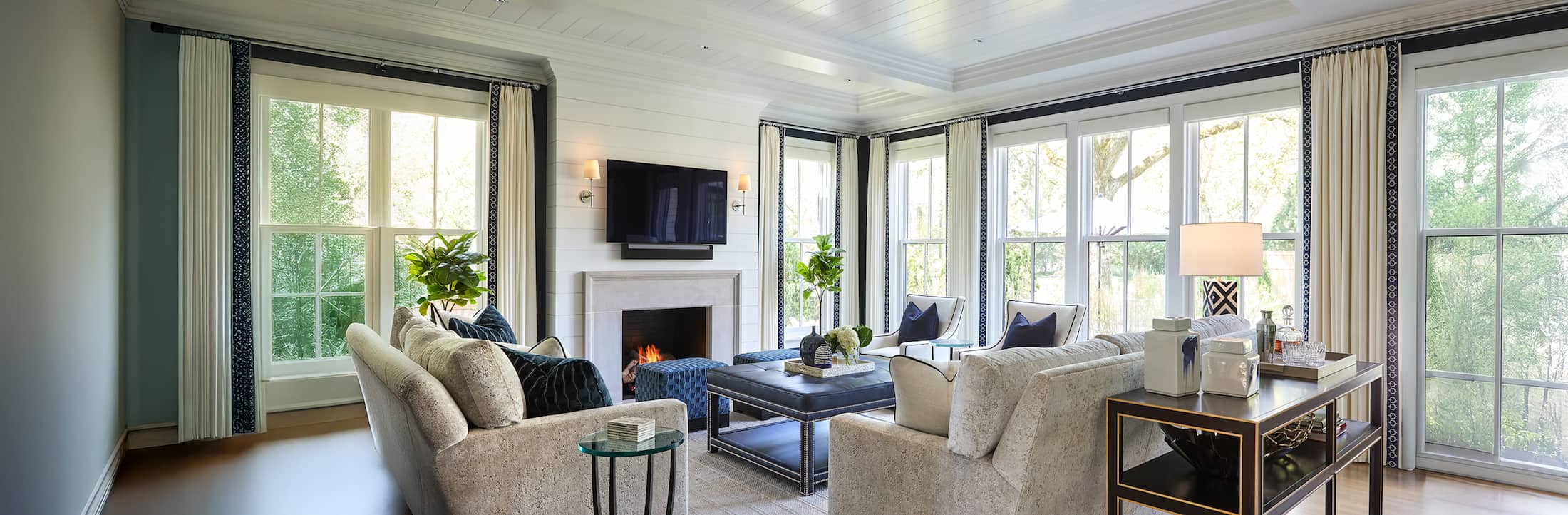
Pinch pleat and other tailored styles feel most at home in Winnetka, Glencoe, Kenilworth, Highland Park, Lake Forest, Lake Bluff, Northbrook, and Deerfield, where high ceilings, crown molding, and generous windows call for fabric that can carry visual weight. Inverted Box Pleat belongs here too, since its clean architectural face suits formal rooms where panels stay stationary at the sides of a window.
We often layer these styles over sheers or pair them with interlining and blackout lining for bedrooms. In older North Shore homes with drafty single-pane windows, that added weight and fullness traps a pocket of still air against the glass, cutting drafts and holding heat through Chicago’s lake-effect winters in a way a thin off-the-shelf panel cannot.
Ripplefold and Tailored Pleat Styles for Modern Chicago Homes
Plenty of Chicago windows do better without a traditional pleat at all. Ripplefold and Euro Pleat are built for glass-heavy interiors and daily operation rather than occasional formal use.
Ripplefold Drapes for Floor-to-Ceiling River North Glass
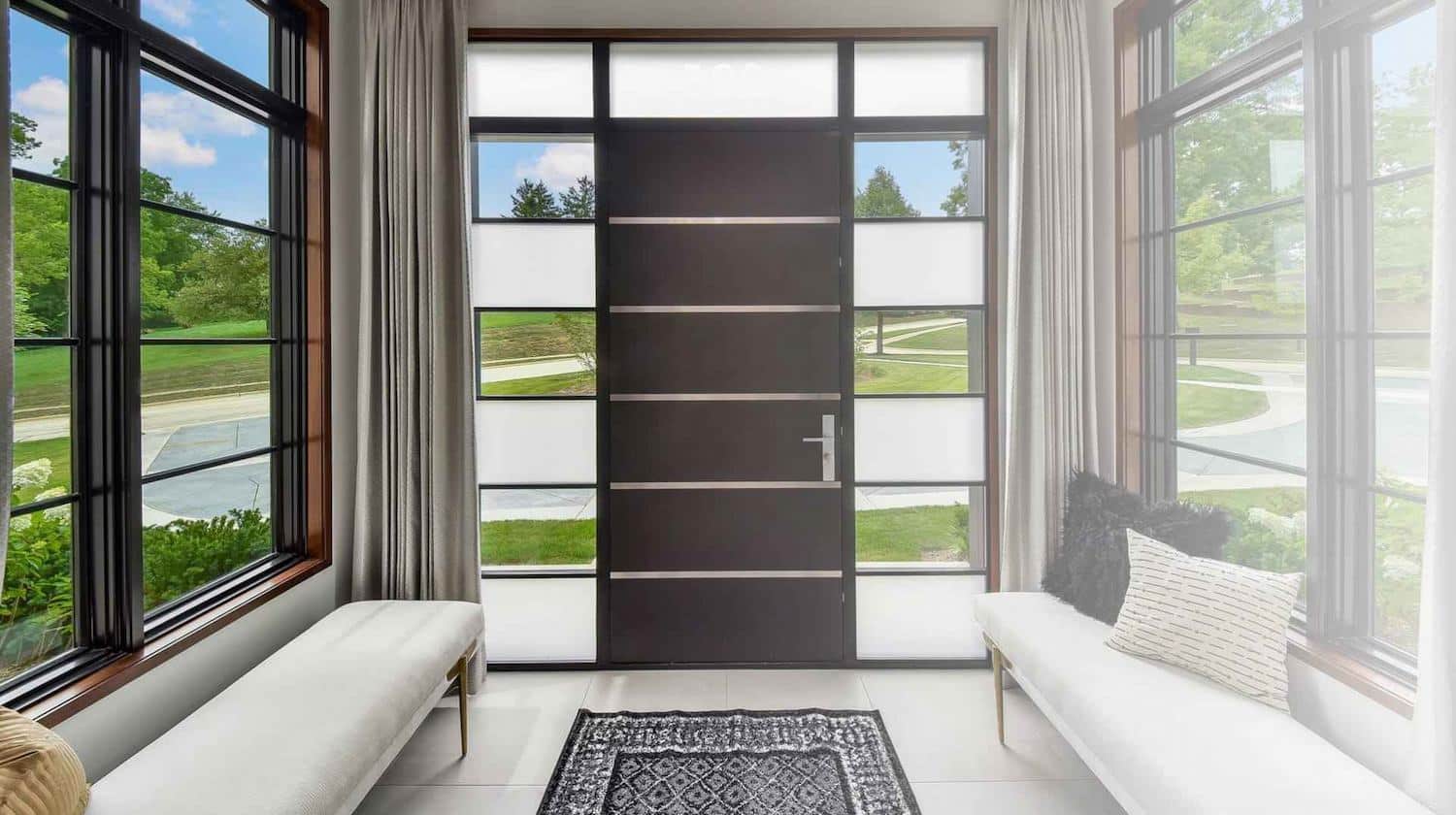
Searches for custom Ripplefold drapes near me come from our River North and Streeterville clients constantly, usually because they’re living behind floor-to-ceiling glass and need something that handles daily use without looking bulky. Ripplefold forms a consistent S-shaped wave from top to bottom, giving the fabric a floating appearance rather than a folded one.
It glides on a track system, stacks back almost entirely at the ends of the track, and exposes more glass than a conventional pleat style, so skyline and river views stay unobstructed. Because it operates smoothly on a track, Ripplefold is also our go-to recommendation for wide expanses of glass and for homeowners planning motorization down the road.
Euro Pleat and Inverted Box Pleat for Sleek, Structured Elegance
The Euro Pleat vs pinch pleat debate usually comes down to header height. A traditional French Pleat is tacked about 3 inches from the top of the panel, while a Euro Pleat is tacked closer to 1 inch from the top, producing a relaxed drop that still reads as tailored. The three-finger Euro Pleat is our most requested version, with the two-finger variant giving slightly less fullness for a leaner profile. Inverted Box Pleat folds inward for a clean, architectural look, but because its fullness sits along the back of the panel, it works best as a stationary panel rather than a drape opened and closed daily.
Choosing the Right Pleat Style for Your Space
The right pleat style depends entirely on your room, not on any fixed hierarchy of styles. We look at ceiling height, how often the drapes will be opened, and whether motorization is on the table, along with how the fabric itself moves within each pleat style, whether it’s heavy Sunbrella or a light linen sheer.
If your condo or building sits within an HOA or historic district, we also help you sort through those guidelines before fabric is ever cut. Request pleat samples and a design consultation, and we’ll bring them to your home so you can compare headers, fullness, and fabric weight side by side in your own light.
Master Workroom Craftsmanship Behind Every Custom Drape
Every one of our custom draperies and curtains is measured and fabricated in our own workroom, not outsourced to a third party. Our rods are typically extended beyond the window frame so drapes stack back cleanly, and we calculate fullness to match each project’s fabric weight and pleat style unless a client requests something different. Traverse rods use a cord-and-pulley mechanism for smooth daily operation, while decorative rods with rings offer more visual flexibility, and every panel attaches with metal pins inserted directly into each pleat. Customers consistently praise the experience on Houzz, from design through installation, describing beautiful, well-crafted window treatments.
Consult Chicago’s Custom Drapery Experts Today
Since 1939, four generations of our family have fabricated and installed drapery for Chicagoland homes, and our own installation team, never subcontractors, handles every hang.
Visit our showroom in Lincolnshire, located inside Toms Price Home, or our Downers Grove location by appointment. We serve all of Chicago and its suburbs, plus Southern Wisconsin, Northern Indiana, and Lower Michigan.
Book your consultation and let’s find the specialized drapery pleats built for your windows.